

Short-dated foreign exchange (FX) forwards can be used to help mitigate the FX rate uncertainty that rises between the time a portfolio company is sold and the funds are repatriated.
Situation
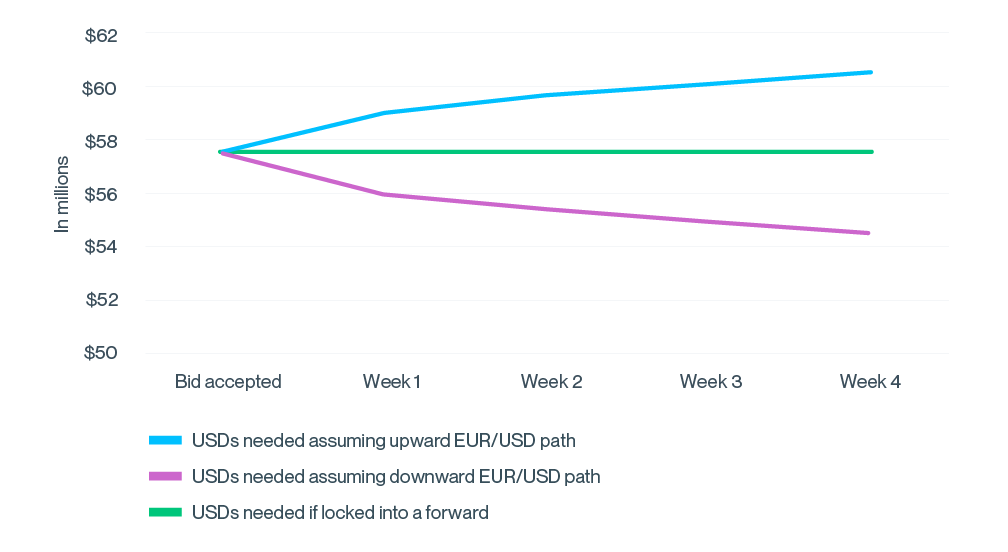
A USD-based fund has sold a European investment priced in euros. The repatriation process can take up to a month before all documents are finalized. Although the final EUR amount figure is known, the timing of the repatriation is unknown. The timing on the transfer of funds back to the U.S. can take anywhere from a few weeks to a couple of months.
Should EUR appreciate in the interim, the total return (investment yield + FX yield) will increase. However, should EUR depreciate before the final conversion, the total return will decrease resulting in a lower overall final IRR.
To eliminate potential losses due to currency fluctuation, FX derivatives are often used to mitigate this risk so that firms can focus solely on the investment-generated returns.
Potential size of FX rate movement
According to the long-term average price for an at-the-money option in the EUR/USD exchange rate, we can assign a 1 in 10 chance that the EUR may move more than 5 percent in either direction over a 4-week period.
Solution
An FX forward is a contractual obligation to exchange one currency for another at a pre-determined fixed rate and a specific date in the future.

 Article